Understanding the Tesla Model S Power Electronic Components
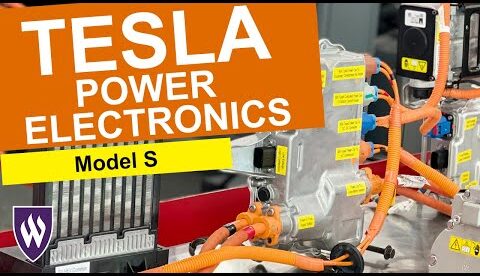
Join me on a journey through 74 feet (22.56 meters) of high voltage cable through 10 different power electronics components of a 2015 and later Tesla Model S AWD.
TIMELINE:
0:00 Start
0:10 Introduction
0:50 Model S cables and common components
1:16 MUST SEE Orange cable core and shielding
2:38 Common component 1 – The Charge Receptacle
4:00 The charging receptacle cable size (50 sq mm) compared to the Tesla Model 3 cable size (95 sq mm)
6:12 Common component 2 – The On-Board Charger Module (48A 11.52 kW)
7:48 Single Phase or three-phase power input ports
10:10 The Interlock circuit
11:50 See the internal parts and connections of the on-board charger
12:28 MUST SEE The AC power input path through the on-board charger
12:55 AC voltage needs to be boosted to ~400V
13:39 The DC power output path through the on-board charger
14:10 The DC power input path through the on-board charger
14:32 The DC contactors used when supercharging the battery
15:47 A Safety Warning that should have been at the start of the video
16:54 The DC output from the on-board charger
17:26 Common component 3 – The Rapid Splitter (Front Junction Box)
17:50 The connection to the high voltage battery through the rapid splitter
18:22 The function and internal connections of the Rapid splitter
22:20 The position of the Rapid Splitter in the vehicle under the rear seat
22:50 Common component 4 – The rear motor inverter
24:54 Summary of the high voltage components in the rear of the vehicle
25:48 MUST SEE Pyrofuse Pack battery cable tag and pyrotechnic fuse
26:22 The standard 1300 amp fuse
26:40 The 2000 amp pyrotechnic fuse and its internal components
30:30 Why the battery fuse is needed
31:45 The high voltage components and cables at the rear of the vehicle
32:28 Common component 5 – The High Power Distribution Module (HPDM) (Front junction block)
33:20 See the four internal fuses and circuit board inside the HPDM
34:22 Another Interlock switch
34:48 The battery coolant heater control circuit
35:48 The high voltage connections from the Rapid Splitter to the HPDM
36:49 Common component 6 – The front motor inverter
38:17 The NVH Mat covering the front Drive Unit and motor
39:55 Common component 7 – The electric air-conditioning compressor (40A Fuse)
41:23 Common component 8 – The 2500 Watt DC to DC converter (30 A Fuse)
42:05 DC to DC converter output of 178 amps at 14 volts
43:03 the DC to DC converter charges the 12V battery
44:16 Common component 9 – The high voltage battery coolant heater (30 A Fuse controlled)
46:18 Common component 10 – The Positive Temperature Coefficient (PTC) Cabin Air Heater (40A Fuse)
48:18 The high voltage components and cables at the front of the vehicle
49:29 Almost all Electric Vehicles (EV) have the same common components shown in this video
50:39 Additional EV training is available for you.
51:12 Wrap up and summary
ABOUT US
Weber State University (WSU) Davis Campus – Automotive Technology Department – Advanced Vehicles Lab. A technical description and demonstration of the Tesla Model S Power Electronics cables and components. We teach current vehicle technologies to our automotive students at Weber State University and online. For more information visit:
This video was created and edited by Professor John D. Kelly at WSU. For a full biography, see
Visit my other youtube channel to see the amazing NVH app for vibration diagnosis!
ADDITIONAL TRAINING FOR YOU
Join us for hybrid and electric vehicle training with two online courses and in a 5-day on-campus boot camp with Professor John D. Kelly. See
DONATE TO OUR DEPARTMENT
Please consider a donation to the Department of Automotive Technology at Weber State University here:
You are a gem and I am blessed to have such a wonderfull lesson today. Thanks a lot.
Bedankt
thank you Professor John D. Kelly
The sponsored link commercial on this video is a misleading! It depicts the Broncos spot as capable and that’s misleading! The bronco may be capable, but it’s a totally different vehicle than the bronco sport which is cheap junk and not very capable of regular around town driving let alone off-road driving! I know because we had one and it couldn’t even make it over a bridge without overheating at 18,000 miles! The only real capable vehicle here is the bronco
Profesor gracias por sus videos son didácticos .
Saludos desde Argentina